
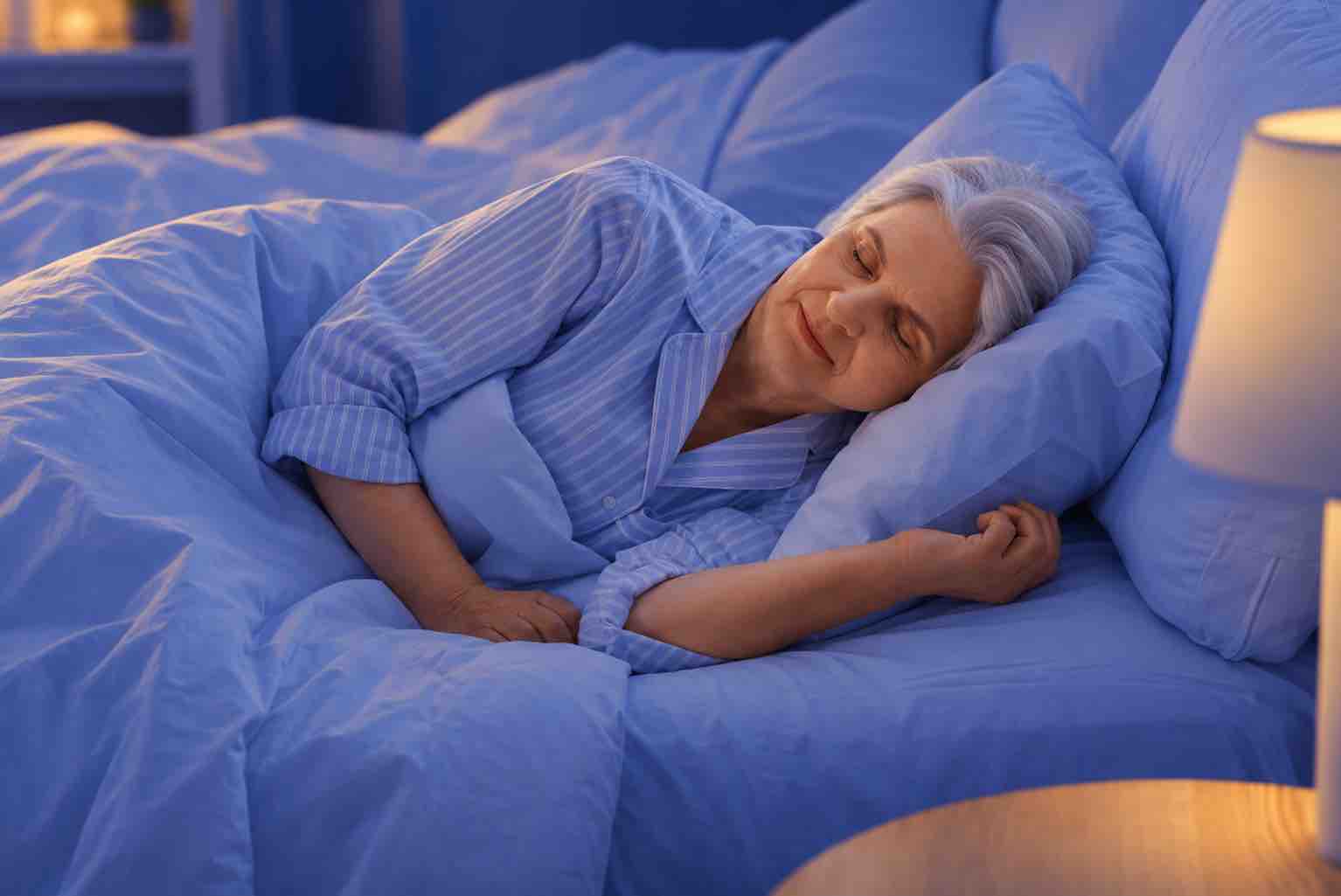
What Can Medicine and Technology Offer to Improve Sleep in Parkinson’s Disease?
Sleep disturbances associated with Parkinson’s disease can have different underlying causes. Some are related to:
Motor symptoms that occur during the night;
Changes in the brain mechanisms that regulate sleep;
Breathing difficulties;
Specific sleep disorders.
This distinction matters because the most appropriate treatment depends on the underlying cause.
Medical and technological advances are opening up new possibilities for improving sleep quality in people with Parkinson’s disease. Although no single approach offers a miracle solution, several have shown encouraging results and may contribute to more restful nights. Discuss these options with your doctor.
Melatonin (Supporting the Body’s Internal Clock)
Melatonin is a hormone naturally produced by the brain that helps regulate our sleep-wake cycle. Its secretion generally increases in the evening, signaling to the body that it is time to prepare for sleep.
Melatonin is also among the options being considered for sleep disturbances in Parkinson’s disease. People with Parkinson’s often experience disruptions in their circadian rhythms and reduced melatonin production, making supplementation a particularly relevant option.
Compared with conventional prescription sleeping pills, melatonin is generally well tolerated in people with Parkinson’s disease and produces fewer residual effects upon waking, potentially reducing the risk of nighttime falls.
Beyond sleep regulation, research has highlighted melatonin’s antioxidant and anti-inflammatory properties. Clinical studies have reported improvements in certain markers of oxidative stress and inflammation. Although some trials have also observed improvements in overall Parkinson’s symptom scores, the evidence remains insufficient to establish a direct benefit on daytime motor function.
CPAP: Continuous Positive Airway Pressure (When Breathing Disrupts Sleep)
Obstructive sleep apnea (OSA) is a common disorder among people with Parkinson’s disease. A meta-analysis published in 2024 estimated that approximately 45% of patients were affected, although prevalence varies across studies.
OSA occurs when the upper airways repeatedly narrow or become blocked during sleep. These interruptions can reduce blood oxygen levels and cause frequent awakenings, sometimes without the person even noticing.
Continuous positive airway pressure (CPAP) is one of the main treatments for OSA. A mask connected to a machine delivers a gentle stream of pressurized air to keep the airways open throughout the night.
Recent research suggests that treating sleep apnea may provide several benefits for people with Parkinson’s disease, including:
Improving Cognitive Function
The COPE-PAP randomized controlled trial, published in the journal Sleep in 2025, followed 94 people with Parkinson’s disease.
After six months, patients using CPAP performed better on cognitive tests than those in the control group. However, the difference was not sufficiently clear to establish a definite benefit.
The researchers therefore conducted a statistical analysis accounting for certain differences between patients, particularly their age and health status. After these adjustments, the results became statistically significant, suggesting a possible beneficial effect of CPAP on cognitive abilities.
Improvements were also observed in certain executive functions and psychomotor abilities, particularly those involved in planning and coordination tasks.
Improving Motor Function
A longitudinal study published in 2020 followed 67 people with Parkinson’s disease for up to 12 months. Researchers observed that untreated sleep apnea was associated with greater motor deterioration, while patients receiving CPAP treatment maintained more stable motor function.
These observations were further supported by a longitudinal study published in 2026, reporting an association between regular CPAP use and slower motor and cognitive deterioration.
Restoring More Restorative Sleep
CPAP has also demonstrated benefits for sleep quality in people with Parkinson’s disease.
A randomized controlled trial published in Sleep in 2014 investigated the effects of CPAP in 38 patients with both Parkinson’s disease and obstructive sleep apnea.
Researchers found that CPAP significantly reduced nighttime breathing interruptions, increased the proportion of deep sleep, and decreased excessive daytime sleepiness.
These findings suggest that treating sleep apnea may promote more restorative sleep and greater alertness during the day.
Please note: Some patients may find it difficult to tolerate wearing a mask throughout the night.
CBT-I: Cognitive Behavioral Therapy for Insomnia (Relearning How to Sleep Well)
Cognitive behavioral therapy for insomnia (CBT-I) is considered a first-line non-pharmacological treatment for chronic insomnia. It helps patients identify and modify thoughts and behaviors that interfere with sleep, without the risks associated with sleeping pills.
A clinical study conducted in 2020 involving 15 people with Parkinson’s disease reported improvements in sleep efficiency, insomnia symptoms, and daytime functioning following CBT-I.
A scoping review published in 2025 also identified promising results regarding sleep quality, while emphasizing the need for larger clinical trials.
Typically delivered over 4 to 8 sessions, CBT-I combines several techniques:
Sleep Psychoeducation: Patients learn how sleep works, including sleep-wake cycles, the different stages of sleep, and nighttime awakenings. In the context of Parkinson’s disease, this step can also help patients better understand how motor symptoms, medications, and neurological changes disrupt their nights.
Stimulus Control: Patients learn to reserve their bed primarily for sleep. If they remain awake for an extended period, they may be encouraged to get up temporarily and engage in a calming activity before returning to bed when they feel sleepy again. This technique aims to restore the association between bed and sleep.
Cognitive Restructuring: The therapist helps patients identify negative or excessive thoughts about sleep and its consequences. Patients then learn to challenge these thoughts and develop more realistic expectations, helping reduce the anxiety that can perpetuate insomnia.
Relaxation Techniques: Breathing exercises, muscle relaxation, and mindfulness practices may be recommended to reduce physical and mental tension before bedtime and promote a state conducive to falling asleep.
Adapted Sleep Hygiene: Patients learn to maintain regular sleep schedules, increase exposure to natural daylight, limit caffeine intake later in the day, and create an environment conducive to rest. Any potential adjustments to Parkinson’s medications are discussed separately with their doctor or neurologist.
Beyond insomnia, research suggests that cognitive behavioral therapies may also help manage depression and anxiety in people with Parkinson’s disease.
A 2021 meta-analysis involving 14 randomized controlled trials reported significant improvements in both categories of symptoms.
Better Sleep Also Begins With Understanding Your Needs
As we have seen in this newsletter, sleep disturbances associated with Parkinson’s disease are not inevitable.
The research presented shows that several approaches, including melatonin, continuous positive airway pressure, and cognitive behavioral therapy for insomnia, may help improve sleep quality.
Everyone experiences Parkinson’s disease differently, and the underlying causes of sleep difficulties can vary. Understanding the origin of these disturbances, with the guidance of a healthcare professional, is therefore a first step toward finding an appropriate solution.
In our next newsletter, we will explore simple, accessible strategies that you can incorporate into your daily routine to promote more restorative sleep.
In the meantime, remember that there are many options worth exploring. Although our users have reported improvements in their sleep quality since taking AtremoPlus, there may still be small changes that can make an additional difference.
Because taking care of your sleep also means setting yourself up for better days ahead!
References for the studies cited:
Effects on cognitive function
Lajoie, A. C., et al. (2025). Cognition and obstructive sleep apnea in Parkinson’s disease: Randomized controlled trial of positive airway pressure. Sleep, 48(7), zsaf038. https://doi.org/10.1093/sleep/zsaf038
Effects on motor symptoms and disease progression
Meng, L., et al. (2020). Obstructive sleep apnea, CPAP therapy and Parkinson’s disease motor function: A longitudinal study. Parkinsonism & Related Disorders, 70, 45–50. https://doi.org/10.1016/j.parkreldis.2019.12.001
Zhu, S., An, D., & Liu, X. (2026). Obstructive sleep apnea, biomarker profiles, and clinical progression in Parkinson’s disease: Longitudinal effects of CPAP therapy. Sleep Medicine, 139, 108766. https://doi.org/10.1016/j.sleep.2026.108766
Cognitive Behavioral Therapy for Insomnia (CBT-I)
Lebrun, C., Gély-Nargeot, M.-C., Rossignol, A., Geny, C., & Bayard, S. (2020). Efficacy of cognitive behavioral therapy for insomnia comorbid to Parkinson’s disease: A focus on psychological and daytime functioning with a single-case design with multiple baselines. Journal of Clinical Psychology, 76(3), 356–376. https://doi.org/10.1002/jclp.22883
Latella, D., et al. (2025). Cognitive behavioral therapy for insomnia in neurodegenerative disorders: Targeting sleep disturbances in Alzheimer’s and Parkinson’s disease: A scoping review. Frontiers in Psychology, 16, 1700496. https://doi.org/10.3389/fpsyg.2025.1700496
Luo, F., et al. (2021). Efficacy of cognitive behavioral therapy on mood disorders, sleep, fatigue, and quality of life in Parkinson’s disease: A systematic review and meta-analysis. Frontiers in Psychiatry, 12, 793804. https://doi.org/10.3389/fpsyt.2021.7938
This content may be important for people who need this natural solution. Thank you for sharing!
By clicking the button below, I am leaving the information site:
Disclaimer:
Please note that this blog provides information about our AtremoPlus supplement and related topics.
This blog is not intended to provide medical advice. If you have medical questions, please consult your healthcare professional.